


Preventing acne requires a consistent approach, not an aggressive one. Those who frequently experience pimples, blackheads, or subcutaneous inflammation usually benefit from a routine that keeps the skin calm, helps clear pores, and respects the skin barrier. This sounds simple, but this is often where things go wrong: over-cleansing, combining too many products, or switching between trends.
An effective approach begins with a clear understanding of what exactly triggers acne. Sebum, keratinization in the pore, bacterial activity, and inflammation work together. Hormonal fluctuations and genetic predisposition can further fuel this process. The good news: you can do a lot to limit breakouts, even if your skin is naturally prone to impurities.
Why acne occurs in acne-prone skin
Acne is not a sign of "dirty" skin. This misconception persists, but it is incorrect. The problem primarily arises when pores become clogged by a mixture of sebum and dead skin cells. In such a confined environment, inflammation can develop more quickly.
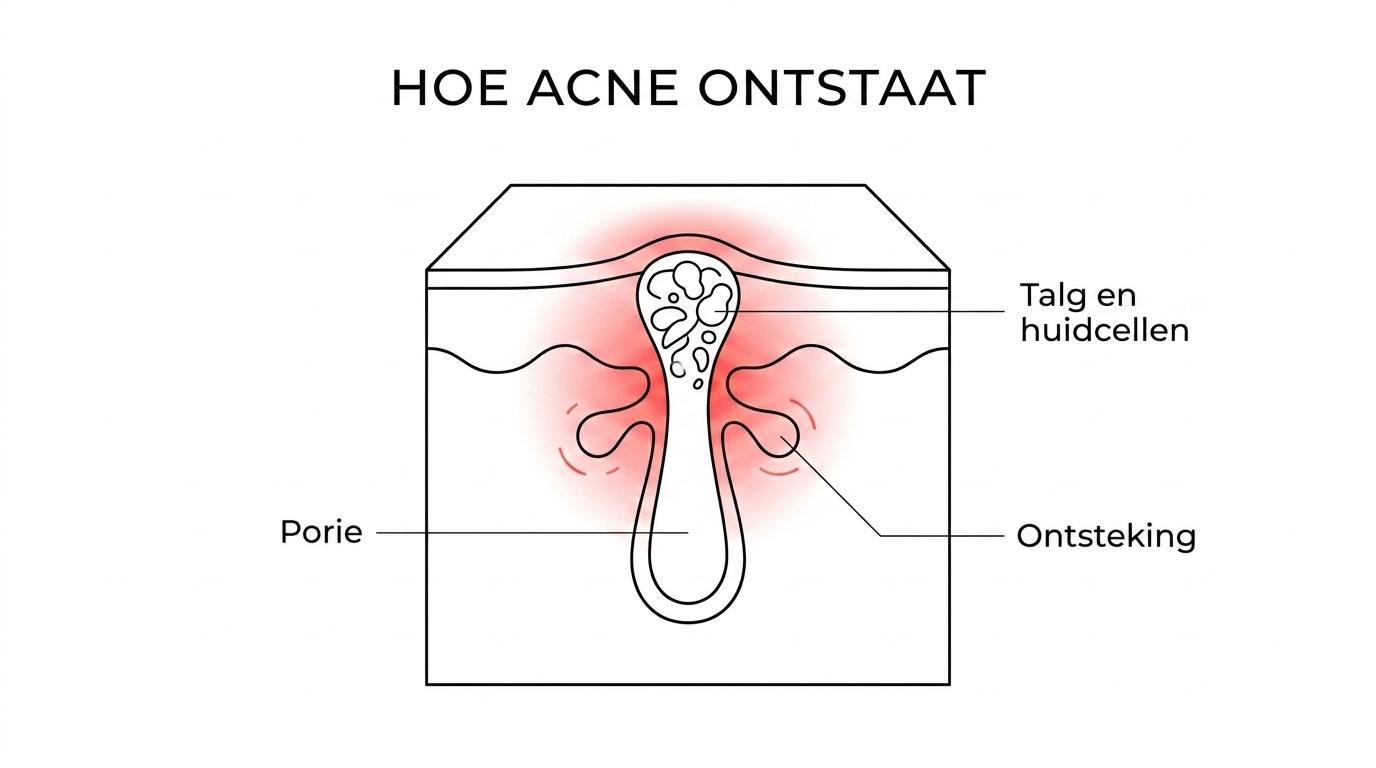
For many people, hormones play a clear role. During puberty, around the menstrual cycle, during stress, or with hormonal fluctuations, sebum production often noticeably increases. Those with a genetic predisposition are more likely to experience pimples or deeper inflammation as a result.

This immediately explains why acne prevention is more than just applying a cream. A well-thought-out routine, smart product choices, and stable lifestyle habits collectively make a difference.
Daily skincare routine for acne
The basis of acne prevention is simplicity. Skin that already reacts sensitively rarely improves from ten active products at once. It's better to have a consistent routine with mild steps that you can maintain for a long time.
Cleanse morning and evening with a soap-free, mild cleanser. Lukewarm water is ideal. Hot water dries out and can exacerbate redness. Hard rubbing or scrubbing may seem effective, but often causes more irritation and a more disturbed skin appearance.
After cleansing, a light hydrating cream or gel cream is smart, even for oily skin. Dehydrated skin can become even more imbalanced. Therefore, choose non-comedogenic products with ingredients that retain moisture without feeling heavy.
A simple routine often looks like this:
- cleanse in the morning
- light hydrating cream
- sun protection with a non-comedogenic formula
- cleanse again in the evening
- targeted serum or treatment
- re-hydrate
Exfoliating for acne without irritating the skin
Exfoliation can be very beneficial if you choose the right type. Chemical exfoliants with salicylic acid or mild AHAs help loosen dead skin cells and keep pores clear. Salicylic acid is particularly interesting here because it is oil-soluble and thus works deeper into the pore.
The mistake is usually in the frequency. Daily use of a strong acid is too much for many skin types. One to two times a week is often sufficient initially. Observe how your skin reacts and gradually increase. A slight tingling sensation is normal, but burning or flaking is a signal to scale back.
A clay mask or a mild botanical mask can occasionally be an extra step, especially for a shiny T-zone. Don't see it as a quick fix, but as support within a broader plan.
Which ingredients help prevent acne
For acne-prone skin, it pays to read labels. Not every "purifying" product is truly suitable. Some formulas dry out the skin or contain ingredients that actually clog pores more quickly.
Good choices usually combine sebum regulation, anti-inflammatory action, and barrier restoration. This sounds technical, but in practice, it boils down to a few well-known, potent active ingredients.
|
Ingredient |
Why it is useful for acne |
What to look out for |
|---|---|---|
|
Salicylic Acid (BHA) |
Helps clear pores, reduces blackheads and excess sebum |
Start with low frequency |
|
Niacinamide |
Supports the skin barrier, helps reduce redness and shine |
Fits well into daily routine |
|
Azelaic Acid |
Works against impurities, redness and post-acne marks |
Often well tolerated |
|
Zinc |
Can regulate sebum and temper inflammation |
Useful in creams and serums |
|
Hyaluronic acid / glycerin |
Hydrates without feeling heavy |
Good in light gel creams |
|
Ceramides |
Strengthen the skin barrier |
Extra useful with irritation from active ingredients |
When choosing products, these rules of thumb are helpful:
- Choose: soap-free cleansers, light moisturizers, non-comedogenic sun protection
- Actively look for: salicylic acid, niacinamide, azelaic acid, zinc
- Be careful with: harsh alcohols, strongly fragranced formulas, heavy occlusive creams
- Preferably avoid: aggressive scrubbing, alkaline soaps, makeup that quickly clogs your pores
If you want to specifically look for products for blemishes, you can consult a selection for acne-prone skin here: acne treatment.
Hydration and sun protection remain essential for acne
Many people skip moisturizer as soon as their skin feels oily. This is understandable, but not ideal. Skin that lacks moisture can become tight, irritate more easily, and respond less well to active ingredients. Hydration is therefore not a luxury, but a basic step.
Choose textures that feel light and fresh: gels, fluid creams, emulsions. Ingredients like glycerin, hyaluronic acid, and ceramides are often a strong combination here. They support the skin without leaving a sticky film.
SPF also deserves a permanent place. Sunlight can sometimes mask inflammation in the short term, but in the long term, UV damage often exacerbates redness, post-inflammatory hyperpigmentation, and uneven texture. So, use a non-comedogenic sunscreen daily, especially if you use acids or azelaic acid.
Lifestyle and acne prevention: diet, stress, and sleep
Not every pimple can be attributed to diet, but eating patterns do influence many people. Especially a diet high in fast sugars and highly refined carbohydrates seems to worsen acne in some. This doesn't mean you have to eat perfectly. It does mean that stability pays off.
A balanced foundation often helps more than strict prohibitions. Think of vegetables, fiber, whole grains, legumes, fish, and unprocessed meals. Some people also notice improvement when they limit their intake of sugary drinks or certain dairy products.
Stress is a second factor that is often underestimated. During tension, stress hormones rise, which can affect sebum production and inflammatory activity. You can sometimes literally see this in the mirror during busy periods.
And then there's sleep. Skin that doesn't recover sufficiently often looks redder, more sensitive, and more agitated. Regularity counts. Seven to eight hours of sleep per night remains a strong foundation for many people.
Small habits often make a big difference:
- regular sleep hours
- fewer sugar spikes
- exercise
- breathing exercises
- sufficient water
- less worrying about the skin
Habits that secretly feed acne
It's not just products that count. Daily habits can perpetuate impurities, even when your routine looks good on paper. Think of often touching your face with your hands, picking pimples, dirty pillowcases, or sweating for a long time after exercising without cleansing your skin.
Makeup can also play a role. Not because makeup itself is "bad," but because heavy textures, careless removal, and old brushes can burden the skin more quickly. Choose formulas that feel lightweight and thoroughly remove everything in the evening.
An often overlooked factor is overtreatment. Impatient individuals quickly add extra acids, spot treatments, and drying toners. The skin then becomes irritated, red, and reactive. This sometimes looks like "more acne," while it is partly a disrupted skin barrier.
Pay extra attention to these pitfalls:
- Squeezing pimples: increases the risk of inflammation and scarring
- Washing too often: can unbalance the skin
- Using strong scrubs: irritate more than they help
- Leaving makeup on: increases the chance of clogged pores
- Switching products too quickly: makes it difficult to properly assess the effect
When a targeted acne treatment becomes useful
Prevention is powerful, but sometimes the skin needs more than basic care. If you have many red bumps, pustules, or painful subcutaneous inflammations in addition to blackheads, a more targeted approach is often advisable. Consider products with azelaic acid, benzoyl peroxide, or other well-researched active ingredients.
If you react quickly to irritation, it's best not to use everything at once. Introduce one active product, two to three times a week, and observe the effect for at least several weeks. Acne responds slowly. Visible improvement usually requires six to twelve weeks of consistent use.
For stubborn acne, scarring, or clear hormonal breakouts, professional advice is wise. A general practitioner or dermatologist can help assess if there's more at play and if medical treatment is needed. This is not a step backward, but rather an efficient choice if the skin is causing a lot of trouble.
Product choice for acne-prone skin with a gentle build-up
A smart approach to acne doesn't have to be complicated. Rather choose a few products that are intrinsically sound than a cabinet full of trends. A mild cleanser, light hydration, a targeted active ingredient, and daily SPF often already form a strong foundation.
Those seeking extra support for pores, sebum, or recurring impurities can specifically look for formulas with niacinamide, zinc, salicylic acid, or azelaic acid. On this page, you'll find a relevant selection for acne treatment and acne-prone skin: view acne products here.
The greatest gain is rarely found in one miracle product. It lies in repetition, gentleness, and choices that make your skin calmer in the long term. That is precisely where effective acne prevention begins.

